
Black Bears can be seen all over the Great Smoky Mountains National Park. About 1,500 Black Bears live here, living in the woods, and feeding mainly on berries, nuts, and insects. They are able to climb up trees and have proven to be great swimmers, so the Smokies are an ideal environment for them. They enjoy the cool weather, and usually come out during the morning and night during warmer months. However, in colder seasons, they bundle up in dens.
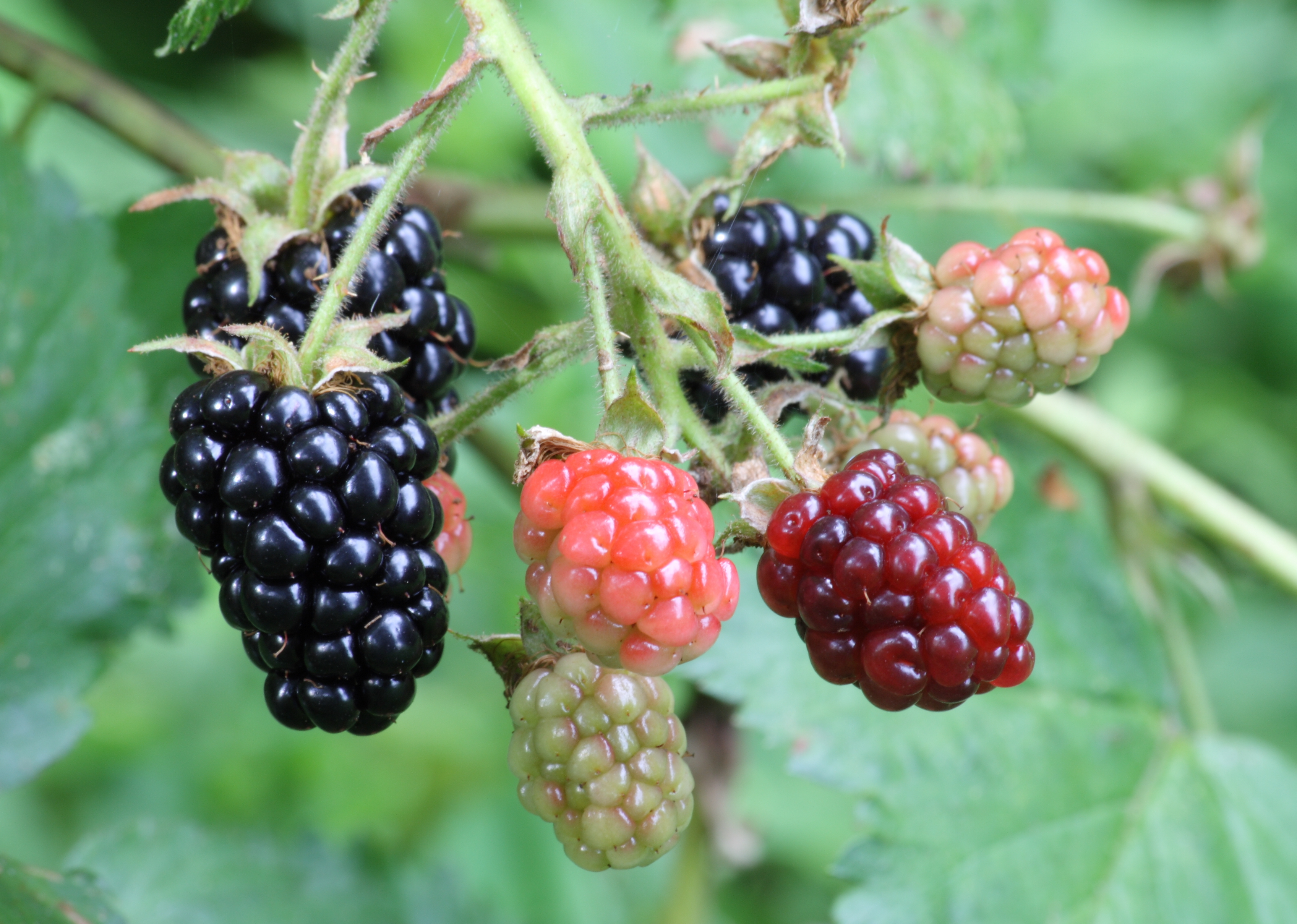
Blackberries are a favorite of both the Black Bears and the visitors of the national park. These plants have thorns on them in effort to keep hungry animals away (but that doesn't usually stop them).

White-tailed deer live mostly in the open fields found in the Great Smoky Mountains. They feed off of everything, from acorns and nuts to poison ivy and rhododendron. White-tail deer fawn have white spots on their coats that help camouflage them.

White trillium are just one of the many wildflowers that are found in the Great Smoky Mountain National Park, which is also known as the "Wildflower National Park." The flowers are in synch with the trees, meaning they bloom right before the trees grow their leaves back, allowing a great amount of sunlight to reach them.

Elk are quite possibly one of the most unique animals found in the park, because they were actually introduced to the area as part of an experiment. Roughly 25 Elk were collared, tagged, and put into the land to kick start the experiment. These animals were introduced into the park, because they were once eliminated from the Appalachian Mountains due to hunting and habitat loss. The experiment done in the park was mainly an effort to save a species that might have otherwise become extinct.

Hemlock Trees are some of the biggest and most common trees of the Smokies. They are also a key habitat for many animals. They also provide a cooling system for many creeks. One main threat the the hemlocks are the wooly adelgid, which are non-native insects that have the ability to kill off the trees.
